
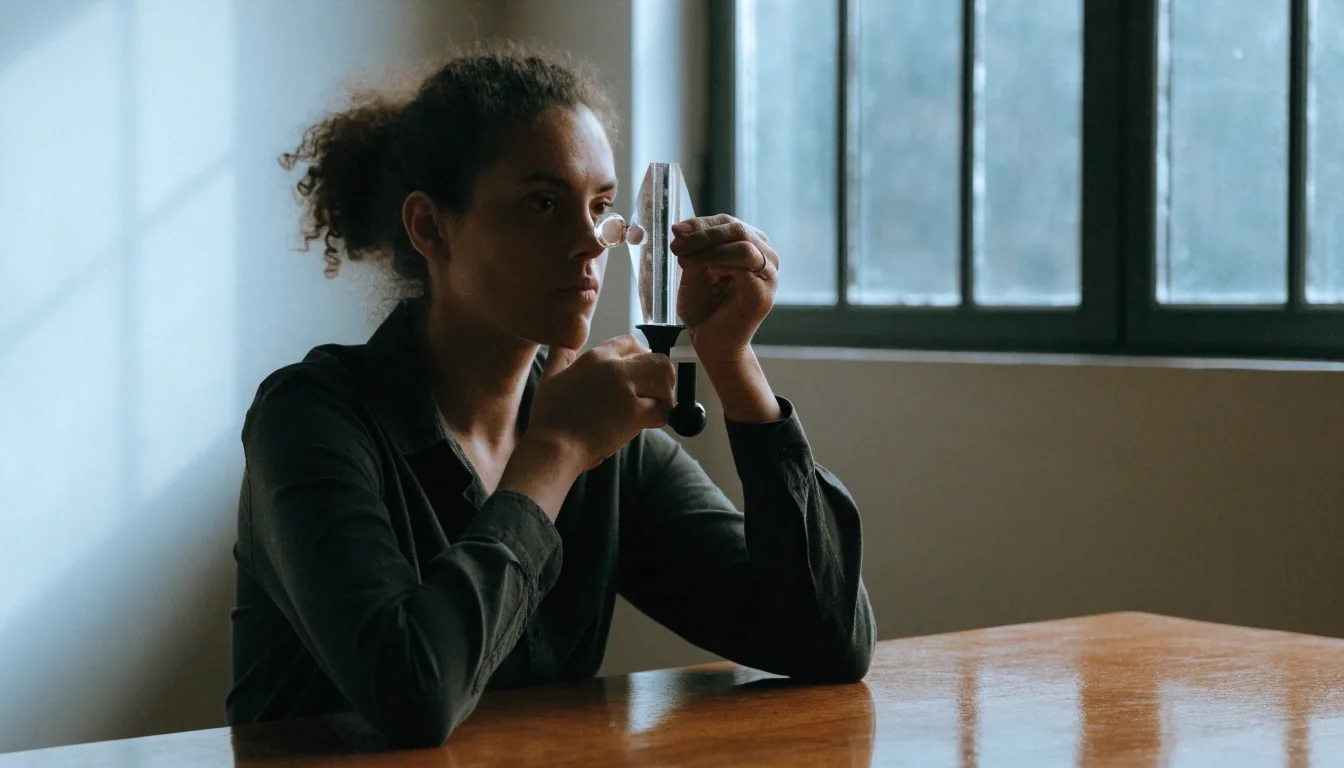
Attention drills that keep visual focus steady
Some focus problems are not about the eyes at all. You can have perfect clarity and still lose the thread of a page three paragraphs in, or find your gaze drifting to every movement in a busy room. That is visual attention, and it is trainable in ways that have nothing to do with eye muscles. This page covers fixation practice, mindfulness-based intervals, and distraction-suppression drills, and explains which settings each one suits.
Visual attention is not the same as sharp vision
Sharp vision is about the image forming on your retina. Visual attention is about what your brain chooses to process from the constant stream of input. You can hold both eyes perfectly still on a line of text and still read nothing, because attention went elsewhere.
That distinction explains a lot of frustration. People with excellent eyesight can struggle to study for an hour, and people who need glasses can concentrate for long stretches. When your problem is losing track of a task rather than seeing it clearly, the drill you need works on attention, and it will look quite different from an eye exercise.
Sharp vision
The image landing on the retina: how well the eye focuses light, and how clearly a target resolves at a given distance.
image qualityVisual attention
What the brain selects and holds from the stream of input — the part that decides whether a clear image actually gets used.
selection and holdAttention drills sit alongside eye-comfort habits rather than replacing them. Fixation work changes what you hold on to; distance gazing and blink breaks keep the eyes comfortable enough to keep holding it.
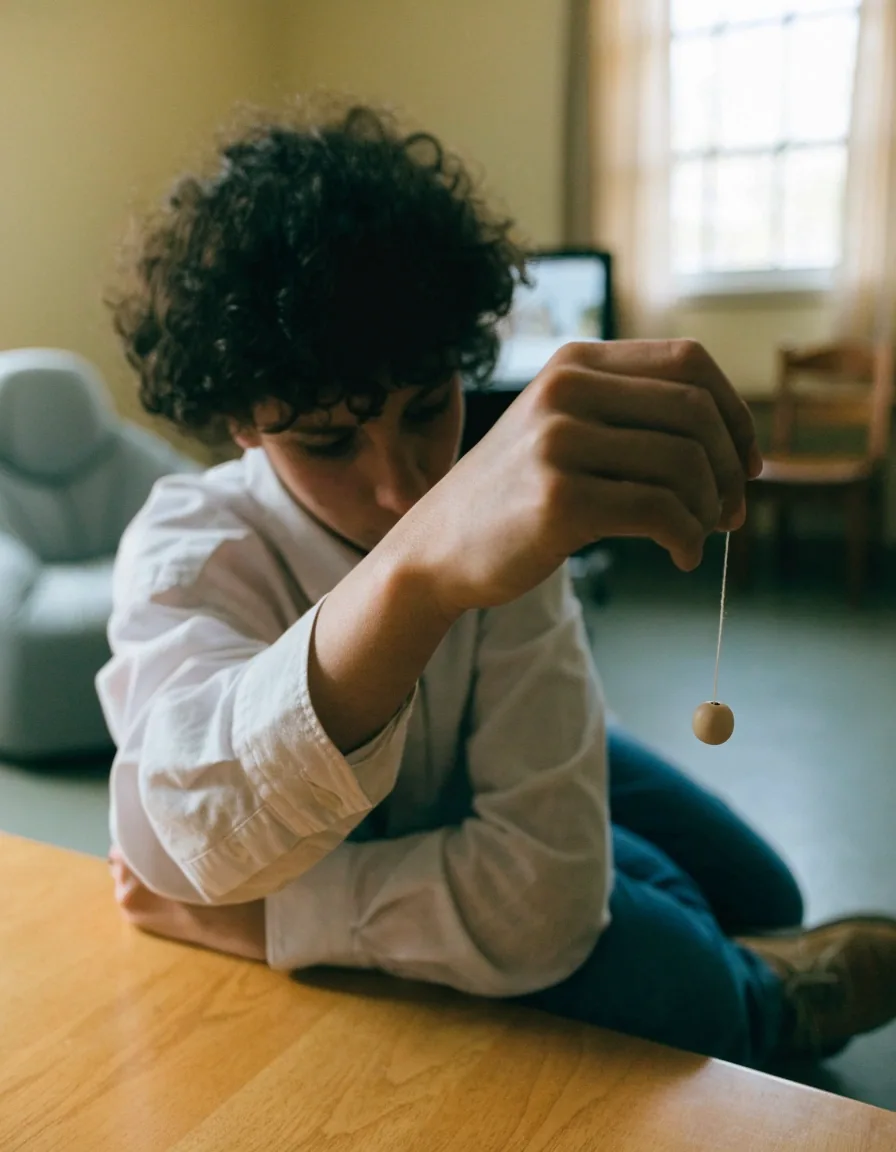
Holding a target still, and noticing when you do not
The most basic attention drill is to pick a point and keep your gaze there. A spot on the wall, the tip of a pen, a mark on the desk. Hold it for a minute, notice when your attention drifts, and bring it back without scolding yourself. That is the whole exercise.
The value is in the noticing. Every time you catch the drift and return, you are practicing the exact move that sustained study requires. Start with a minute; two or three is a reasonable ceiling for beginners. Longer sessions tend to produce more fidgeting than focus, and the point is the quality of the return, not the length of the hold.
Study, sport, gaming, and open-plan work each ask for a different dose of the same four drills.
Mindfulness intervals for sustained focus
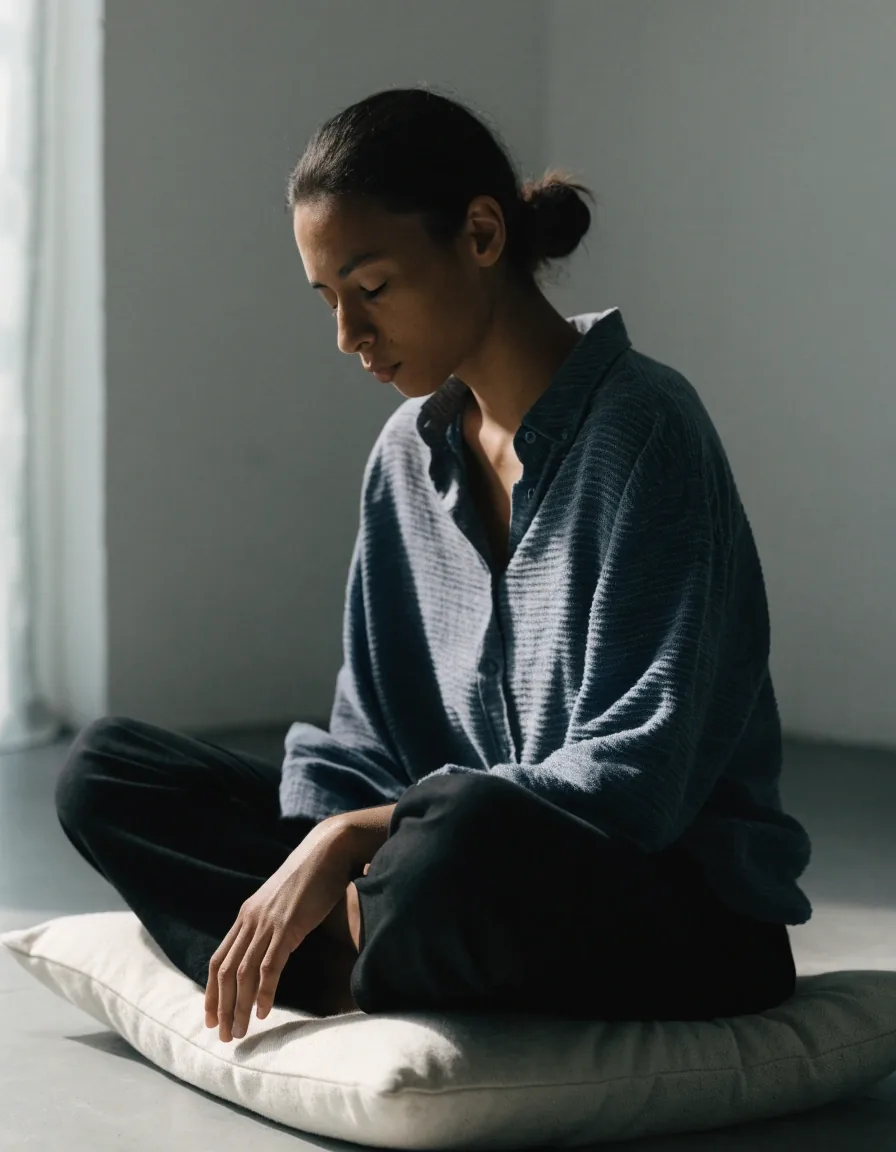
Mindfulness appears in attention-training discussions for a reason that has little to do with relaxation. Sustained attention is a skill, and mindfulness practice is essentially repetition of it, often with a single anchor such as the breath or a visual point. You may recognize the format from meditation writing; here we are using it for a specific job.
A workable version for a student or desk worker: pick a fixed interval, commonly starting around five minutes, hold your attention on one visual target, and note each time it wanders. Keep a tally if that helps. Over a couple of weeks, most people find the number of drifts per interval drops, though not linearly; some days are simply worse.
-
Sustained attention
One anchor, held for a fixed interval while competing input stays unaddressed.
-
Self-monitoring
Noticing the moment attention leaves, before you act on the distraction.
-
Flexible switching
Returning cleanly instead of negotiating with the thing that pulled you away.
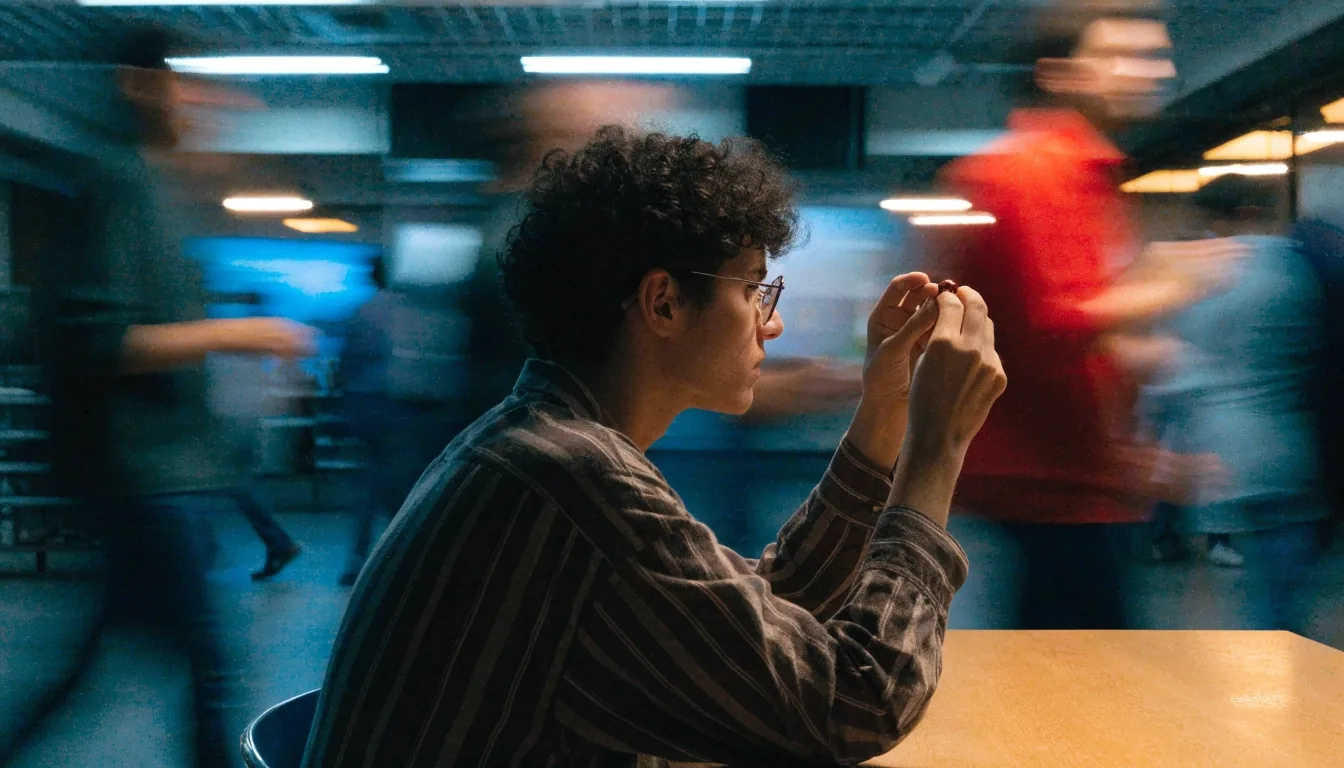
Practicing under noise instead of waiting for quiet
Distraction suppression is the performance end of this category, and it appears in attention research on athletes as a way to improve control in competitive or chaotic environments. It is exactly what it sounds like: maintaining your focus while other things compete for it, rather than waiting for a quiet room.
You can practice a mild version deliberately. Work on a single visual task in a space with background movement or sound, and treat each pull of attention as a repetition rather than a failure. This is not an argument for always studying in chaos. It is insurance for the days when quiet is not available, which for most students and open-office workers is often.
One visual task, a room with mild movement or sound, and a fixed end point so the session stays repeatable.
Every pull of attention you notice and release. You are not scoring a clean run; you are logging the returns.
If the eyes are already tired or the work is brand new and unfamiliar, take the quiet room first and come back to this later.
Where this fits for students, athletes, and desk workers
The application changes with the setting, and so does the drill. None of these replace eye-comfort habits. Attention practice keeps your focus pointed in the right direction; distance gazing and blink breaks keep the eyes comfortable enough to sustain it.
Read about screen fatigueStudy
Fixation pauses before a long reading block, then short mindfulness intervals inside the block.
before and duringSport
Tracking work combined with distraction suppression, practiced in conditions that resemble play.
match-like conditionsGaming
Brief fixation sets before a session, to build the habit of holding a target under pressure.
before a sessionOpen-plan work
Distraction suppression as a daily skill rather than an occasional exercise.
dailyHow distraction suppression relates to eye exercises
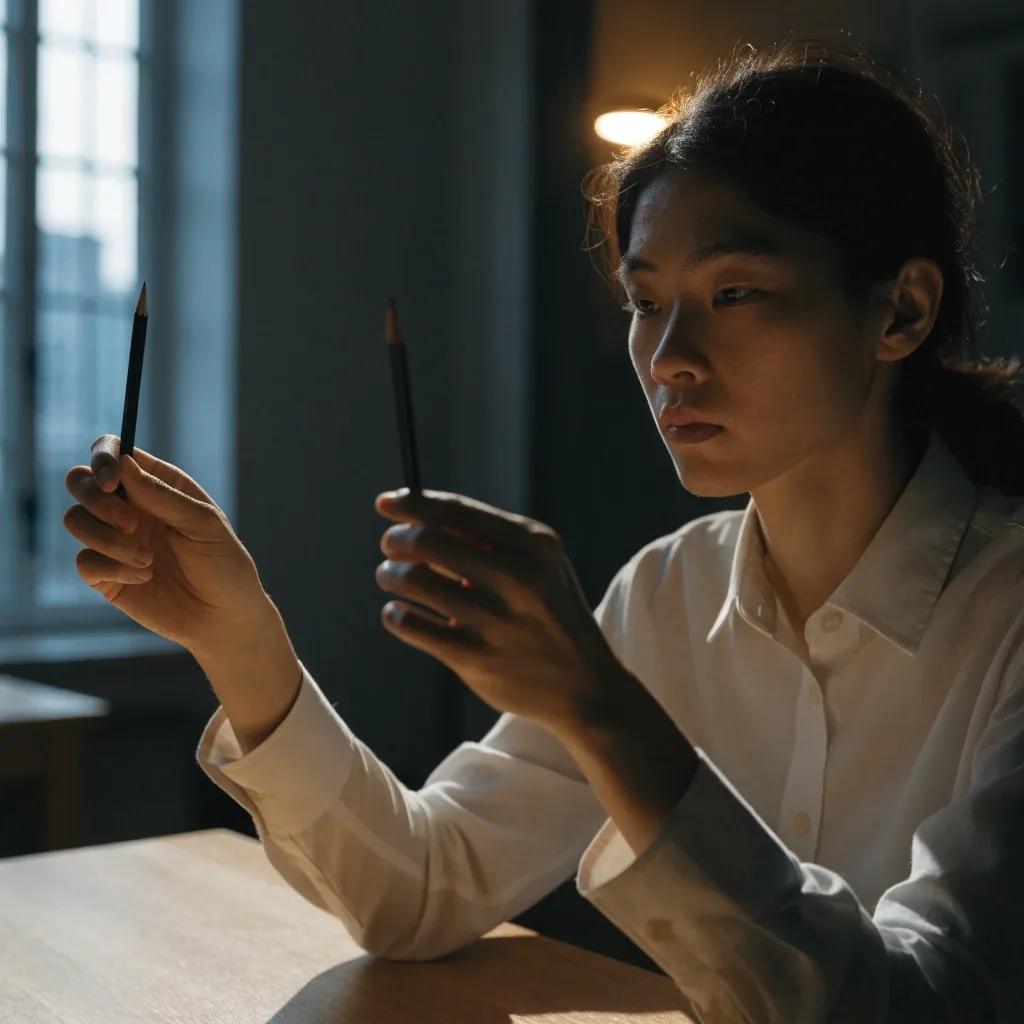
This is the confusion worth clearing up. Pencil pushups and tracking drills work on how the eyes move and coordinate. Distraction suppression works on what your brain does with the input. They support the same outcome from opposite ends.
In practice, most people need a bit of both. If your eyes feel tired and your reading is effortful, start with the eye-comfort side. If your eyes feel fine but your focus collapses the moment a notification appears, start here. The two work well together once each is established on its own.
A simple week that fits almost any schedule
Attention drills respond to frequency more than duration. Three or four short sessions a week, five to ten minutes total, is enough to build the habit. If even that feels like a stretch, cut the fixation sessions first; the other two carry more of the benefit for most people.
What progress feels like, and what it does not
Progress here is unglamorous. You finish a twenty-minute reading block without checking your phone. You notice a drift and return in a second instead of a minute. You get through a noisy commute with a book instead of giving up.
What it does not look like: a permanent state of unbreakable concentration. Attention fluctuates, and tiredness, stress, and poor sleep all move the needle. The drills build your baseline, not a guarantee. Expecting a switch you flip once and never lose is the fastest way to abandon a routine that was actually working.
Drifts noticed late, phone checked mid-page, quiet room needed.
Drifts caught in a second, blocks finished, noisy rooms survivable.
If progress stalls for two weeks straight, the usual cause is duration creep. Drop back to the shorter version and keep the frequency.
Common questions
The questions visitors ask most about attention drills, fixation, and how this fits with eye comfort.
Check common questionsIs losing focus the same as having weak eyes?
No. Sharp vision describes the image forming on the retina; visual attention describes what your brain picks out from the stream of input. People with excellent eyesight can struggle to hold a page for an hour, and people who wear glasses can concentrate for long stretches. When the problem is losing the thread rather than seeing the words, the drill that helps is an attention drill.
How long should a fixation hold last?
Start with a minute. Two or three minutes is a reasonable ceiling for beginners, and longer holds tend to produce more fidgeting than focus. What you are training is the return, not the endurance. If the hold gets vague and your eyes start to wander listlessly, stop the set and come back later.
Should I practice distraction suppression every day?
Once a week inside a real study or work block is a sensible starting point, and it can become a daily skill later. Deliberately working in noise is not a reason to always work in noise. Use it for the days when quiet is not available, and keep the rest of your practice in conditions that let you concentrate properly.
Do these drills replace distance gazing or eye breaks?
They do not. Attention practice keeps your focus pointed at the right thing; distance gazing and blink breaks keep the eyes comfortable enough to sustain it. If your eyes feel tired and reading is effortful, start with the eye-comfort side and add attention drills once that is settled.
What if my focus gets worse for a few days?
That is normal. Attention fluctuates, and tiredness, stress, and poor sleep all move the needle. The drills build a baseline rather than a permanent state, so a bad week is not evidence that the routine failed. Keep the frequency and drop the length if you need to.
Four drills, one short week, a steadier gaze
If you want the full set in one place, the methods library collects every focus and eye-comfort routine on this site with the setting each one suits. If you would rather ask about a specific situation first, the editorial team reads every message.
Eyes tired and reading effortful: begin with screen fatigue and distance gazing. Eyes fine but focus collapses when a notification appears: begin here.
Monday to Friday, 9:00 AM – 6:00 PM. Jl. Cikini Raya No. 58, Menteng, Jakarta Pusat, DKI Jakarta 10330, Indonesia.
+62 21 5291 5496
[email protected]