

Near-far focusing
Pencil pushups and the basics of convergence
Hold a pencil at arm's length, keep it single and clear, and bring it slowly toward your nose. This page covers what the drill trains, how to read your stopping point, and when to stop practicing and get your eyes assessed.
What convergence is, and why close work depends on it
When you look at something a foot away, your eyes have to rotate slightly inward so both point at the same object. That movement is convergence, and it is paired with accommodation, the focusing adjustment your lens makes for near distances. For most people, this happens automatically and without effort.
Problems start when the two eyes do not converge accurately or comfortably. The brain compensates, which costs energy, and the cost shows up as eye strain during reading, words that seem to drift or double, and headaches after relatively short close-up tasks. Convergence insufficiency is the name for this pattern when it becomes persistent. It is a functional binocular issue, not a general eyesight problem, and it is the reason pencil pushups exist as an exercise at all.
The two systems normally work as a team. When they drift out of step, close tasks stop feeling easy long before your vision looks wrong on a wall chart, which is why the symptom often gets blamed on the screen rather than on the coordination behind it.
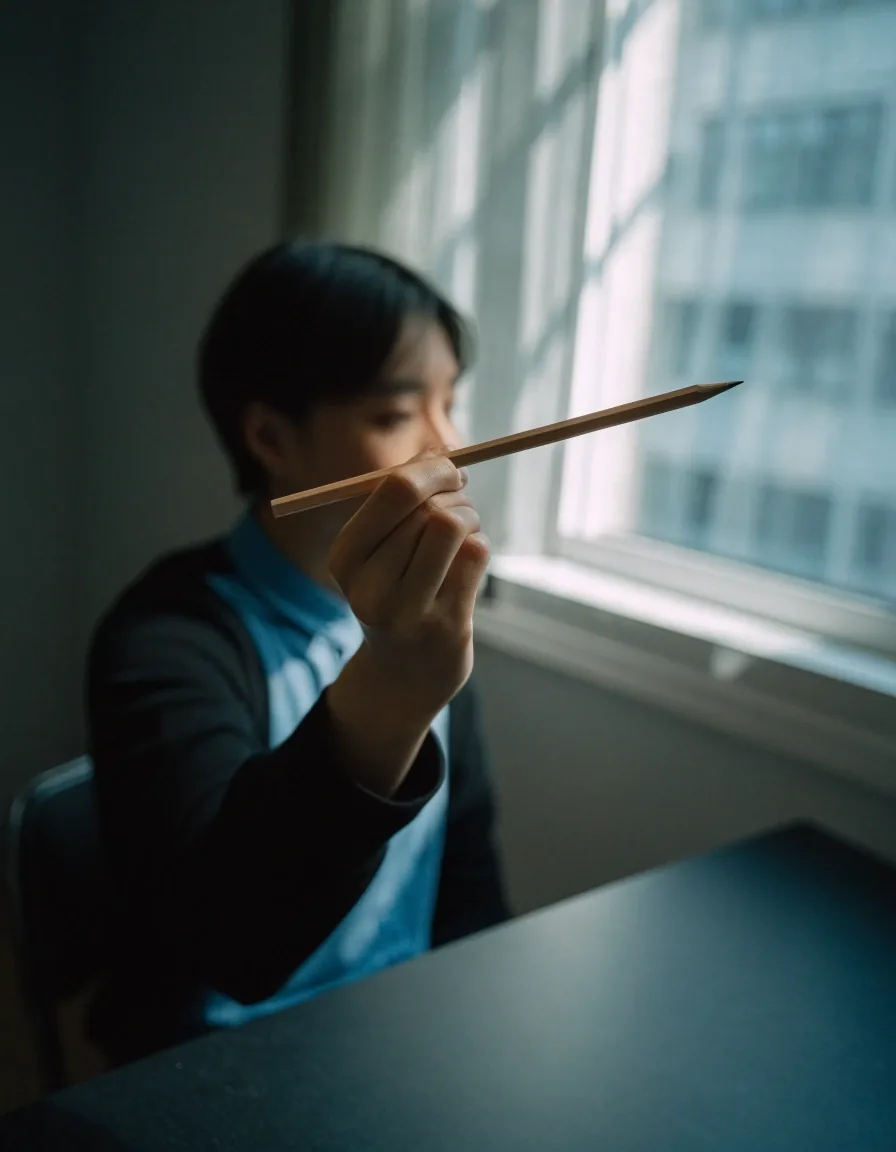
A near target has to stay single for the eyes to hold it.
The drill, step by step
You need a pencil, a pen, or even an upright finger. Pick one and keep it consistent. Start with the target at arm's length, at about eye level, with good light on it.
-
01
Look at the tip and confirm it is single and reasonably clear. If it is already double at arm's length, that is worth mentioning to an eye-care professional rather than pushing through.
-
02
Move the target slowly toward your nose, a few centimetres at a time. Slow is the whole technique; a fast approach usually means the eyes lose the target before the muscles have done any real work.
-
03
Stop the moment the tip doubles, blurs past recovery, or your eyes feel strained. The doubling point is a limit, not an obstacle, and it moves on its own timeline.
-
04
Hold briefly at that edge, then move the target back out and relax. Rest between repetitions is part of the drill, not a break from it.
The distance where the target doubles is your working edge. You are not trying to force past it. You are practicing right up to it and letting the eyes recover. That is the entire exercise.
The stopping point is the practice
Reading your stopping point correctly
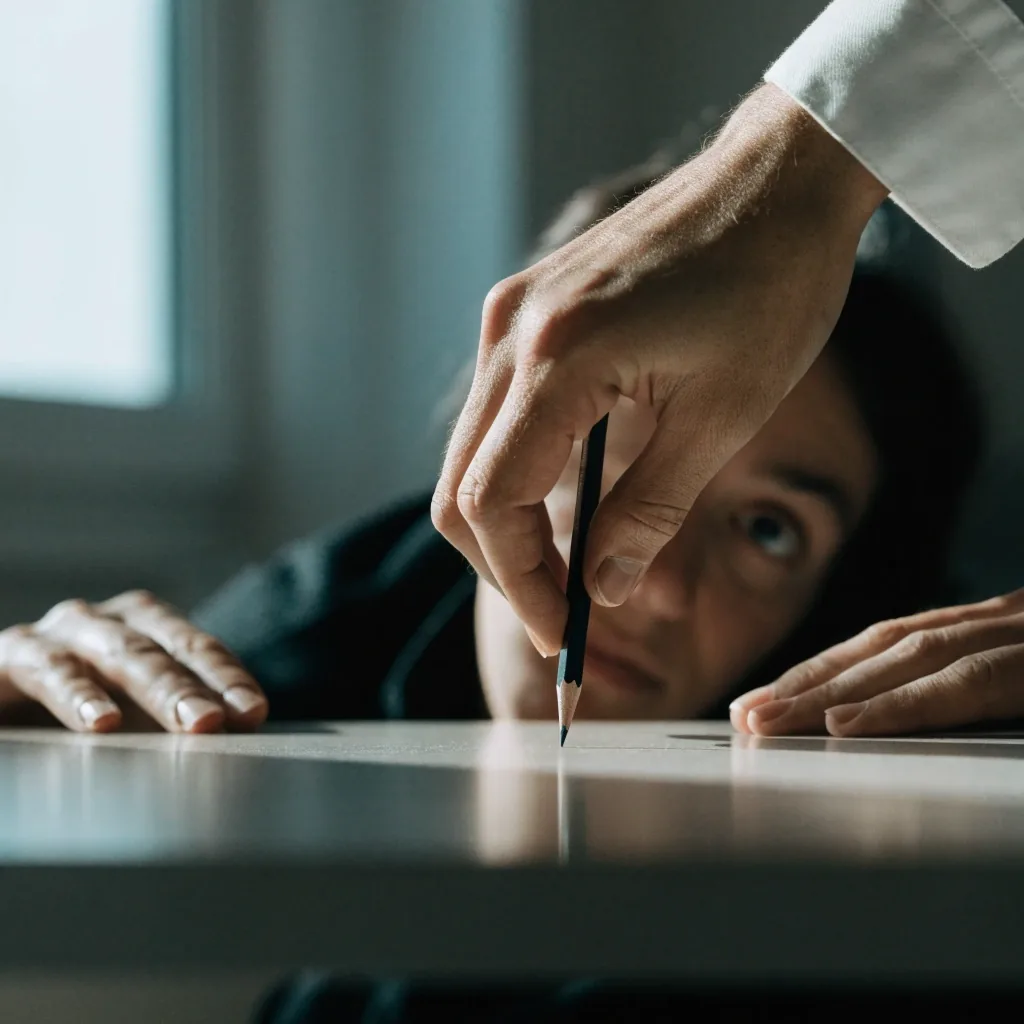
Beginners tend to treat the double image as a challenge. It is not. A target that doubles means your eyes have reached the limit of comfortable convergence at that moment, and continuing means you are practicing a strain pattern rather than a controlled movement.
The useful signal goes the other way. Over weeks of short, consistent practice, many people find the doubling point moves closer to the face, or that they can hold a single image a bit longer at the same distance. That slow movement is what progress looks like. There is no version of this drill where you muscle through the double image and come out ahead, and if a session leaves you with a headache, you have done too much or moved too fast.
Keep a plain note of where the target doubles each week, measured roughly from the bridge of the nose. It is a simple record, and it is far more informative than how the exercise felt on any single day. If the number drifts outward instead of inward for two weeks running, that is your cue to slow down or get assessed rather than to add repetitions.
What the evidence and mainstream commentary actually say
Pencil-pushup style exercises come up repeatedly in eye-care and general health writing about convergence. AARP has covered them as something that may help when the eyes do not work together well on close objects, and home-exercise guides from optometry and eye-care sites describe the same drill in similar terms.
Note the wording. "May help" is where the mainstream commentary sits, and it is where this page sits too. The exercise is not a cure for a refractive error and it will not change your glasses prescription. What it targets is the coordination between your eyes for near tasks, and for people whose difficulty is exactly that, it is a reasonable home practice to try.
Published home guides describe one general drill. An assessment tells you whether that drill fits your eyes.
Visionary Dreams Lab editorial note
Session length and frequency that make sense
Short and regular beats long and occasional. A workable pattern is one to two minutes of slow repetitions, once or twice a day, stopping well before fatigue. Some home guides suggest more repetitions; others are more conservative. Given how quickly the muscles involved tire, we lean conservative, and we would rather you finish a session thinking it was easy than spend the evening with a dull ache.
One to two minutes of slow repetitions is enough to practice the movement without tipping into fatigue.
1–2 minOnce or twice a day suits most home routines. Skipping days and doubling up later defeats the point.
1–2× dailyMorning or early afternoon, when your eyes are fresh, gives the clearest feedback on whether the movement stays controlled.
fresh eyesThree or four weeks of consistent practice is a fair trial before deciding the drill is not for you.
3–4 weeksTime of day matters too. Practicing after six hours of screen work mostly teaches you what your eyes feel like when they are already tired. If mornings are genuinely impossible, a short session before your first long screen block is a better compromise than one at the end of the day.
What to watch for, and what it means
Stop and reassess if you notice any of these during home practice. None of them are drill problems. They are signs that the underlying coordination needs a proper assessment, and no amount of extra reps at home will substitute for that.
When home practice is not enough
Convergence insufficiency therapy in a clinical setting looks different from a home routine. It typically starts with an assessment of how your eyes work together, then builds a plan around what the assessment found, sometimes with prisms, lenses, or office-based exercises layered in. The individualization is the point; published home guides describe a general drill, and a professional can tell you whether the general drill fits your case.
If you have done short, careful pencil pushups for three or four weeks with no change, or if any of the warning signs above apply, book an eye exam. That is not a defeat. It is the correct order of operations, and it saves months of practicing the wrong thing.
A home drill can be a reasonable first step. It stops being the right step once three to four weeks pass without change, or when any warning sign shows up.
Editorial guidance, not a diagnosis. Only an eye-care professional can assess your binocular vision. Contact the editorial teamA realistic expectation, stated plainly
Most readers who try this drill and stick with short daily sessions will notice something modest: close reading feels a little less effortful, or fatigue arrives slightly later in the day. That is a reasonable outcome and a useful one. If your goal is to read for two hours without strain instead of one, that counts.
What you should not expect is a repaired visual system. Convergence practice does not correct astigmatism, does not reverse age-related focusing changes, and does not make a screen any less demanding. It trains one specific coordination. Kept in that frame, it is a genuinely useful exercise for the people it fits.
Near reading feeling less effortful over several weeks of short, consistent sessions.
Correcting a refractive error, reversing age-related focusing change, or changing your glasses prescription.
Questions we get about pencil pushups
A few short answers to the questions that come up most often when readers start the drill. The fuller set lives on the FAQ page.
Check the FAQHow many times a day should I do pencil pushups?
Once or twice a day, one to two minutes each time, is the pattern we suggest for home practice. More repetitions are not better here; the muscles involved tire quickly, and a session that ends while it still feels easy is more useful than a long one that leaves you sore.
Should I stop if the pencil goes double?
Yes, and that is the signal the drill is built around. The doubling point marks the limit of comfortable convergence for that moment. Hold at the edge briefly, then move the target back out and let the eyes recover before the next repetition.
Can this replace my glasses or a prescription change?
No. Pencil pushups practice the coordination between your eyes for near tasks. They do not correct astigmatism or other refractive errors, and a prescription is a separate question that only an eye exam can answer.
How long before I notice anything?
Give it three or four weeks of short daily sessions before judging. What typically changes first is how controlled the movement feels, and not long after that the doubling point tends to move closer to the face. If nothing shifts in that window, that is the point to book an assessment.
Keep the drill, and keep the rest of the routine
Pencil pushups train one coordination. If screen-heavy days are your real problem, the distance-gazing routine and the attention drills in our methods library address the other half of it. Start with whichever feels closest to what you actually notice.